
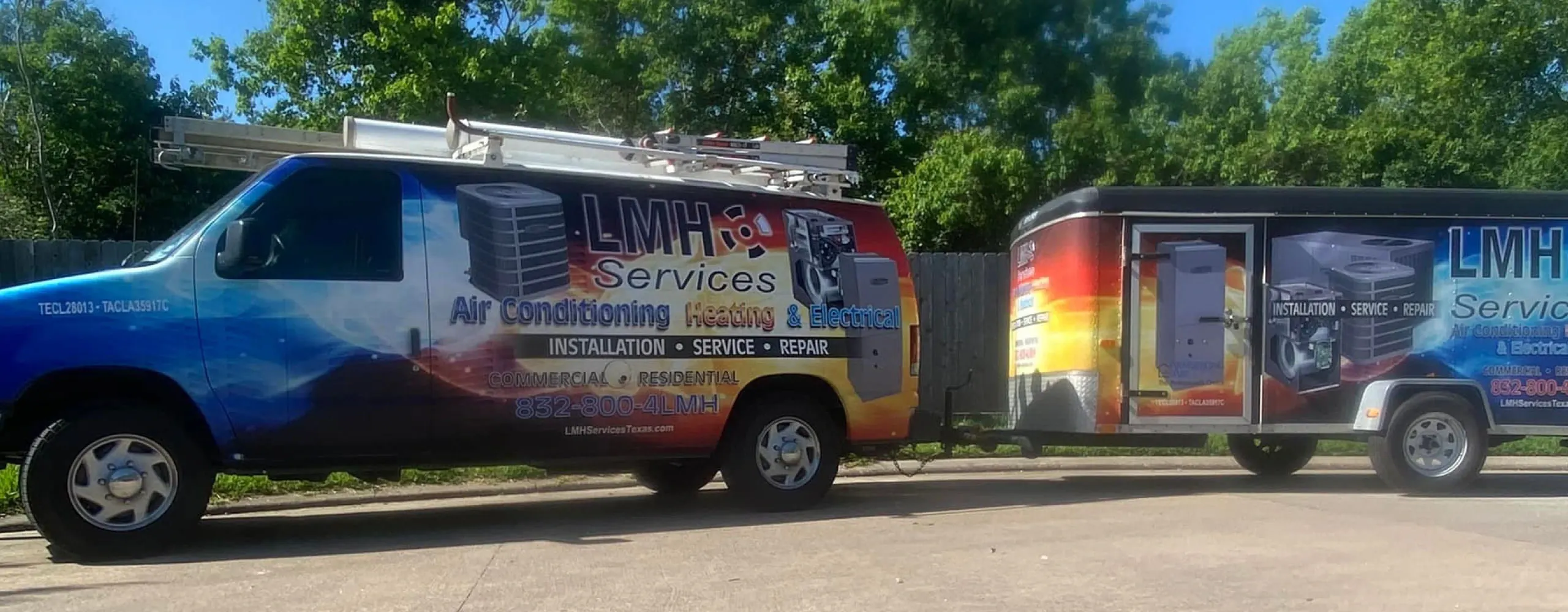
Package Unit Maintenance & Tune-Ups in Greater Houston
Package units work hard through Houston’s hot summers and seasonal temperature swings. Annual maintenance catches wear before it becomes failure—checking refrigerant charge, cleaning coils, testing electrical components, and verifying heating performance so your system runs reliably all year. LMH Services schedules maintenance at the right time, performs a comprehensive inspection and tune-up, and documents findings so you know your system’s condition.
Get a Free Estimate
Request service, book online, get a free estimate, ask about financing, or schedule routine maintenance.
Schedule Your Service For urgent issues, calling 832-800-4564 is the fastest way to reach us.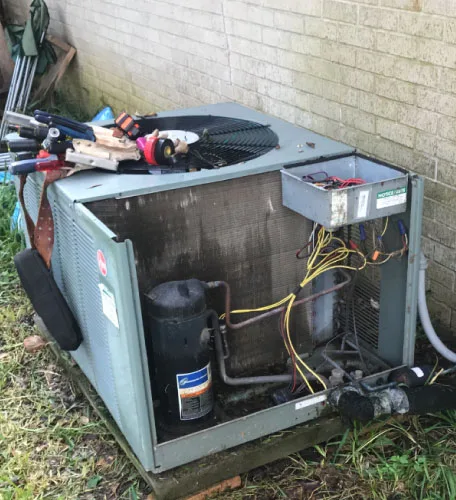
Why Homeowners Trust LMH Services for Annual Package Unit Care
Proactive Wear Detection Before Failure Happens
Package unit components wear predictably. Capacitors degrade after 10–15 years. Compressor bearings show increasing oil traces. Blower motors develop friction as bearings age. During annual maintenance, we test these components against baseline standards and note trends. If a capacitor is showing wear, we alert you now while it’s a simple and affordable replacement—not when it fails on the hottest day of summer and shuts your cooling down entirely. We catch early warning signs with electrical testing, refrigerant charge verification, and oil analysis.
Efficiency Preservation That Saves Hundreds in Annual Energy Costs
Dirty condenser coils reduce cooling capacity by 10–20%, forcing your compressor to run longer and work harder. Low refrigerant charge (from undetected slow leaks) cuts efficiency similarly. Blower blockages or filter neglect reduce airflow, stressing the compressor. During maintenance, we clean coils, verify refrigerant charge, check airflow, test thermostat calibration, and document efficiency metrics. A well-maintained package unit uses 10–20% less energy than a neglected one—savings add up across the 12–15 year system life.
Comprehensive System Knowledge That Guides Long-Term Planning
We maintain detailed service records for your package unit—age, past repairs, component condition trends, seasonal performance notes. If a repair becomes necessary, this history informs whether repair or replacement makes sense. If you’re considering system upgrade, we present facts: “Your unit is 11 years old, the compressor is healthy, but the condenser fan motor is showing bearing wear. If you want to avoid failure, plan replacement within 2 years, or budget for motor replacement now.” Data-driven guidance beats guesswork.
Seasonal Preparation So You’re Ready Before Temperature Swings Hit
In Houston, cooling season begins in April and continues through October. Heating demand peaks in December–February. We schedule maintenance in March (before cooling load) and November (before heating load) so problems are caught and fixed on your timeline, not on an emergency basis. A tune-up in March means you’re cooling-ready and fully documented. A tune-up in November means heating is verified and efficient.
Manufacturer Warranty Protection and Documentation Compliance
Most package unit warranties require annual professional service documentation. If the compressor fails within warranty, the manufacturer may deny coverage if maintenance records are missing or performed by uncertified technicians. We provide detailed maintenance reports proving professional service, protecting your warranty investment.
Proud Members of Our Local Chambers of Commerce



What Houston-Area Homeowners Say
Our Annual Package Unit Maintenance Checklist
From seasonal scheduling to detailed documentation, every step is designed to catch wear before it becomes failure and keep your system running efficiently.
We contact you in late February (for spring cooling season) or late October (for fall heating season) to schedule your annual maintenance. We ask about any performance concerns from the previous season—was cooling weak? Did heating respond slowly? Any unusual noises? This context guides our inspection priorities and helps us check for specific issues you’ve noticed.
For customers who’ve enrolled in our maintenance plan, scheduling is coordinated automatically with priority appointment slots.
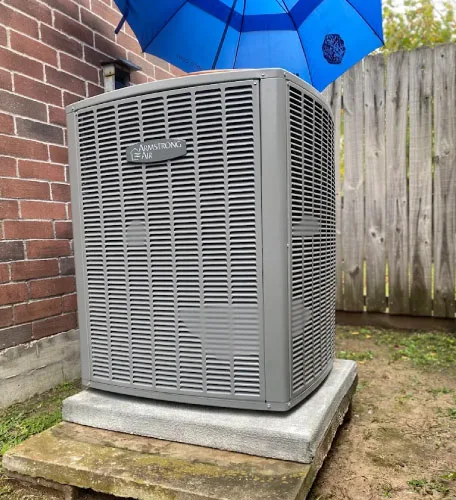
Our technician inspects the physical package unit (rooftop or ground-level) for visible problems:
- Corrosion and Rust — Salt air or high humidity can corrode the cabinet and fins. We note corrosion severity; heavy rust may suggest interior coil corrosion and future refrigerant leaks.
- Vibration Isolation Pad Condition — Rubber isolation pads harden and deteriorate over time. Failed pads increase noise transmission and vibration stress on roof structure. We check pad condition and recommend replacement if needed.
- Debris Accumulation — Leaves, dust, and dirt block airflow through the condenser coil. We note blockage severity.
- Refrigerant Line Condition — We visually inspect outdoor refrigerant lines for dents, kinks, or missing insulation. Damaged insulation lets moisture into the system; dents or kinks restrict refrigerant flow.
- Compressor Oil Residue — Oil traces around the unit suggest slow refrigerant leaks. We document this for pressure testing.
- Condenser Coil Cleanliness — Clogged condenser coils reduce heat rejection. We note if cleaning is needed.
We assess your home’s airflow path from return to supply:
- Air Filter Condition — We check your furnace or air handler filter. Dirty filters restrict airflow and force the compressor to work harder. We note filter type and recommend replacement intervals (typically monthly to quarterly depending on filter MERV rating and home conditions).
- Return Vent Clearance — We verify return air vents are not blocked by furniture, curtains, or other obstructions. Blocked returns starve the system of air, causing low airflow and potential coil freezing.
- Visible Ductwork Condition — For accessible ducts, we look for gaps, loose connections, or visible leaks. Leaky ductwork loses cooled or heated air, reducing efficiency and putting strain on the package unit.
- Condenser Coil Cleanliness — If blockage is noted, we recommend coil cleaning (typically an add-on service). Clean coils improve cooling capacity and efficiency.
We connect refrigerant gauges to verify charge level and cooling function:
- Low-Side and High-Side Pressure Readings — Normal readings confirm correct refrigerant charge. Low readings suggest an undetected slow leak. High readings suggest overcharge or condenser airflow blockage. Abnormal readings trigger detailed diagnosis and discussion with you about options.
- Superheat Measurement — Calculated from low-side pressure and temperature, superheat tells us if the refrigerant charge is precise. Too high means undercharge or metering device blockage. Too low means overcharge.
- Subcooling Measurement — Calculated from high-side pressure and temperature, subcooling confirms proper condenser heat rejection. We document both measurements so future service visits can compare trends.
If readings are outside spec, we don’t recharge without discussing options—is a slow leak present (requiring leak repair first), or is a simple recharge all that’s needed?
We test the electrical health of your package unit:
- Capacitor Testing — Using a multimeter, we test the capacitor(s) that start the compressor and fan motor. Aging capacitors show reduced capacitance; failed capacitors prevent the system from starting. We measure against factory specs and recommend replacement if capacity is declining.
- Contactor Testing — The contactor is an electrical switch that engages the compressor. We verify it closes and opens properly without pitting or sticking.
- Fan Motor Testing — We verify the outdoor condenser fan motor is running smoothly and at correct speed. Slow-running or noisy motors suggest bearing wear.
- Compressor Winding Resistance — Using a multimeter, we measure compressor winding resistance. Abnormal readings (very high or very low) suggest internal compressor problems.
- Thermostat Function — We verify your thermostat is reading room temperature accurately, responding to setpoint changes, and sending correct signals to the package unit. Thermostat drift (reading 75°F when actual is 73°F) forces unnecessary runtime and wastes energy.
For fall maintenance (October–November), we test your heating mode:
Electric Heating — We verify the heating element is operating. We confirm the element receives power when heating is called, glows appropriately, and that air temperature rises as expected when the heating element activates.
Gas Heating — We verify the gas supply is flowing, the ignition system fires properly, the flame sensor detects flame, and the control board is sending correct signals. We check for any unusual odors from the gas line or burner.
Heat Pump Heating — We verify refrigerant reverses to heating mode, pressure readings are in spec for heating, and the outdoor unit operates without freezing up. We confirm the thermostat correctly switches the system to heat mode.
In any case, we test both high and low heating outputs and confirm the system reaches setpoint without excessive overshoot or undershoot.
We run a complete cooling cycle with all electrical and refrigerant components operational:
- Thermostat Calls for Cooling — We set the thermostat below room temperature so the package unit compressor, blower, and condenser fan all start.
- Refrigerant Flow Verification — We verify that condenser outlet temperature is hot (rejecting heat) and evaporator inlet temperature is cold (providing cooling).
- Airflow Performance — We feel airflow at supply registers to confirm the blower is moving air through ducts. If airflow is weak, we diagnose whether a blocked filter, return vent obstruction, or internal issue is responsible.
- Pressure Stability — We observe pressure gauges throughout the cycle. Pressures should stabilize within normal range. If they rise excessively or swing erratically, it suggests system problems.
- Compressor Sound — We listen for unusual noises—grinding, squealing, or loud rattling—that suggest internal wear or mechanical problems.
If any minor adjustments are needed, we make them:
- Superheat Adjustment — If superheat is slightly off (indicating minor undercharge or overcharge), we may add a small amount of refrigerant or adjust the metering device slightly to bring charge into spec.
- Thermostat Calibration — If the thermostat is reading inaccurately, we clean sensors or recommend replacement.
- Blower Speed Optimization — If blower speed is adjustable, we optimize it for your home’s ductwork—ensuring adequate airflow without excessive noise.
We prepare a detailed maintenance report including:
- Component Test Results — All pressure readings, electrical test values, and functional test outcomes
- Findings Summary — What we found in good condition, what shows wear, and what may need attention soon
- Recommendations — Any component replacements, coil cleanings, ductwork sealing, or other services that would benefit your system
- Next Service Timeline — When to schedule your next maintenance (typically 12 months)
- Warranty Compliance Note — Documentation that your system received professional maintenance, supporting warranty coverage
We walk you through the report, answer questions, and discuss any concerns. If we recommend a repair or upgrade, we explain the cost and timeline so you can plan accordingly.
Schedule Your Package Unit Maintenance Today
A single annual tune-up prevents costly summer or winter failures. Let us inspect, test, and optimize your system so you stay comfortable year-round.
Financing Your Package Unit Maintenance
Regular maintenance is an investment in your system’s longevity and efficiency. LMH Services partners with Wisetack for flexible financing options, making it easy to budget for annual tune-ups and any needed repairs.
Financing Benefits


LMH Services has partnered with Wisetack to give you more ways to pay. Wisetack lets you check your options in seconds with no impact to your credit score, and offers simple monthly payment plans without the financial stress.
Keep Your System Running Strong with a Maintenance Plan
Protect your package unit investment with a maintenance plan from LMH Services. Our plans include priority scheduling, detailed inspections, and member discounts on repairs — keeping your system efficient and reliable year-round.
Our Maintenance Plans Include
24 Hour Service Available
Plan members get priority access to our 24/7 emergency service line
Prompt, Local Service
We are locally operated in Deer Park and respond quickly
Expert Technicians & Installers
Thorough inspections that catch small issues before they become expensive repairs
Residential & Commercial
Plans tailored to homeowners and business owners alike
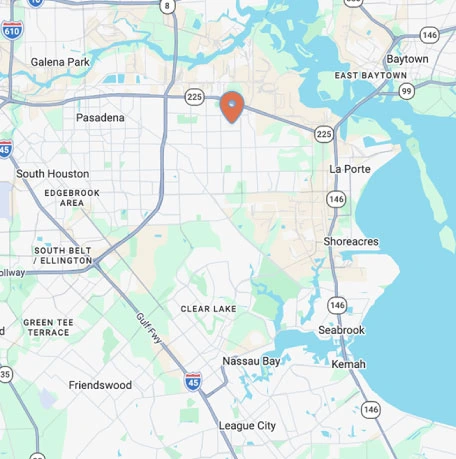
Package Unit Maintenance Service Areas Throughout Greater Houston
LMH Services maintains package unit systems across the Houston area from our home base in Deer Park, TX. Wherever you are in our service area, you get the same comprehensive inspections, detailed testing, and professional documentation.
Serving Communities Around:
Not Sure If We Service Your Area?
Chances are we can help! We’ve served the southern Houston area for a while, so please call 832-800-4564 or contact us today to see if we come out to your area.
Package Unit Maintenance Questions Homeowners Ask
We recommend annual maintenance—ideally a tune-up in spring (March) before peak cooling season and another in fall (November) before heating season. If your unit is over 12 years old or shows signs of wear, twice-yearly maintenance catches problems faster. Our maintenance plan bundles both spring and fall visits with priority scheduling and parts discounts.
A comprehensive tune-up includes visual inspection of the cabinet and mounting system, airflow system check (filter, return vents, ductwork connections), refrigerant pressure testing with superheat and subcooling measurements, electrical component testing (capacitors, contactor, fan motor, compressor windings, thermostat calibration), heating system verification for your heating type, full cooling-cycle test under load, and a detailed written report with component test results and maintenance recommendations. Typical visit takes 1–2 hours depending on unit condition and accessibility.
Maintenance catches most wear early, but it’s not a guarantee against all failures. However, regular maintenance reduces failure risk dramatically—we detect 90%+ of problems before they cause shutdown. Early detection means choosing repair timing instead of facing emergency breakdown. A maintained package unit has roughly half the failure rate of a neglected one.
Because “fine” today doesn’t mean “fine” next month. Component wear is invisible until failure occurs. A capacitor showing 70% of rated capacity will work fine today but fail on the hottest day of summer when the system is stressed. A slow refrigerant leak loses 10% charge every 6 months—invisible today, noticeable in winter. Maintenance detects these trends before they become failures.
Tune-up costs depend on unit accessibility (rooftop units may require lift equipment), system size, and overall condition. If we find components that need replacement during the inspection (capacitor, heating element, worn contactor), those are additional charges beyond the base tune-up. Our maintenance plan reduces the cost per visit through bundling spring and fall visits, priority scheduling, and member-exclusive parts discounts compared to individual service calls. Contact us for specific pricing tailored to your system.
We don’t recommend DIY coil cleaning. The aluminum fins are delicate—bending or damaging them reduces heat rejection. We use pressure-washing equipment and techniques that clean safely without damaging fins. If your coils are heavily blocked with debris or pollen, professional cleaning is worth the investment; it improves cooling capacity and efficiency by 10–20%.
Keep your air filter changed monthly or quarterly (check the existing filter every month). Keep return air vents clear of furniture and blockage. For rooftop units, periodically remove visible debris (leaves, branches) that accumulate around the unit. Check your outdoor condenser unit seasonally for major blockages. Beyond that, avoid DIY maintenance—refrigerant and electrical work require EPA and electrical certification.
Yes, measurably. A well-maintained package unit typically lasts 12–15 years with reliable performance. A neglected unit often needs premature replacement by year 10 due to component failures, compressor wear from dirty coils and low refrigerant, and electrical stress from aging capacitors. The cost of two annual maintenance visits is recovered many times over through extended lifespan, improved efficiency, and avoided emergency repairs.
You can schedule anytime, but seasonal timing is smarter. Spring maintenance (February–April) prepares you before cooling season. Fall maintenance (October–November) prepares before heating season. If you schedule maintenance mid-summer or mid-winter when your system is stressed by weather, the visit may reveal problems that need urgent repair. Seasonal maintenance lets us catch issues before they become emergencies.
No, annual maintenance covers both. Spring tune-ups emphasize cooling system checks (pressures, condenser coil, fan motor, compressor efficiency). Fall tune-ups emphasize heating system checks (heating element or burner, reversing valve for heat pumps, heating control function). A full tune-up assesses both systems even if you only use one seasonally—this catches cross-system issues early.
Invest in Annual Package Unit Maintenance
We inspect every component—cabinet condition, refrigerant charge, electrical components, heating system, and airflow—documenting findings so you know your system’s true condition and can plan for any needed repairs.
Most package unit warranties require annual professional service documentation. We provide detailed maintenance reports proving professional service, protecting your warranty investment and supporting any future claims.
A well-maintained package unit uses 10–20% less energy than a neglected one. Clean coils, proper refrigerant charge, and calibrated thermostats add up to hundreds in annual savings over the system’s 12–15 year life.
We schedule maintenance in March (before cooling season) and November (before heating season) so problems are caught and fixed on your timeline, not on an emergency basis when you need your system most.
Our detailed service records guide long-term planning. If a repair becomes necessary, this history informs whether repair or replacement makes sense. Data-driven guidance beats guesswork every time.