
Gas Furnace Installation for Greater Houston Homes
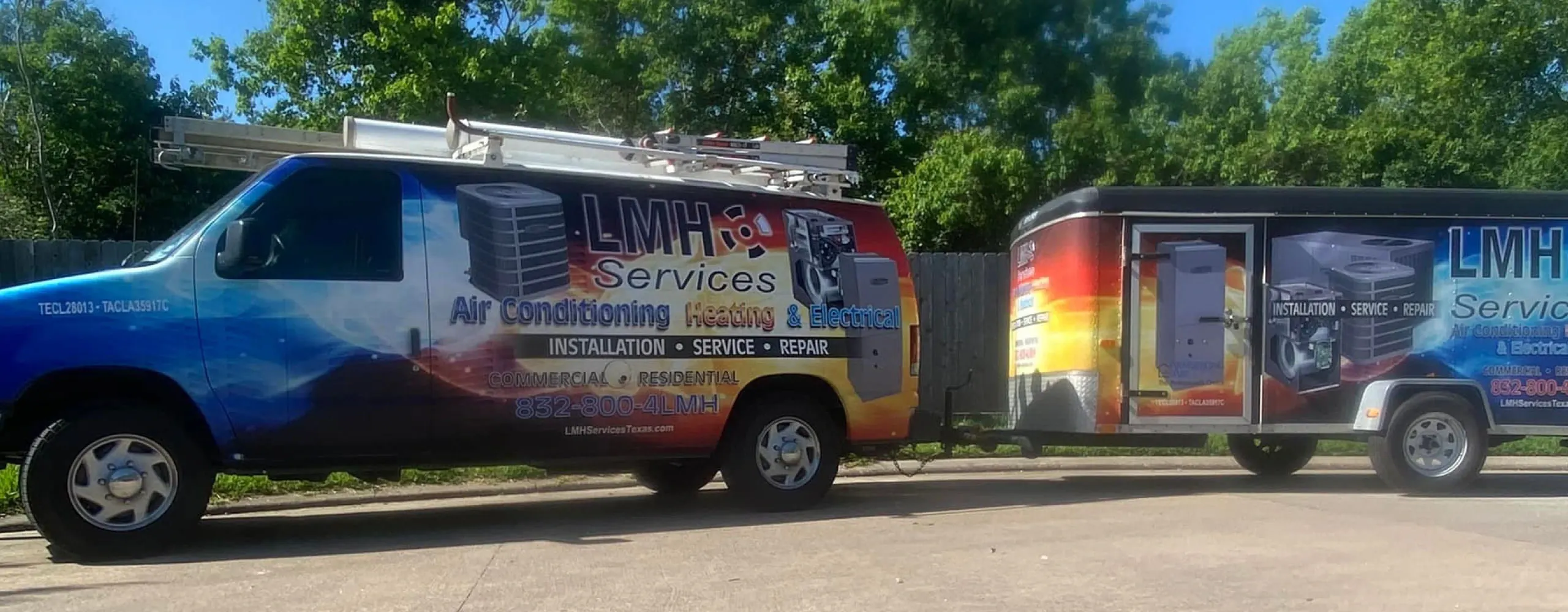
When you’re ready to replace an aging furnace or upgrade to efficient winter heating, LMH Services handles everything from equipment selection through installation, permits, and comprehensive safety testing. We install Armstrong furnaces sized for your home’s heating needs, with proper venting, gas line setup, and carbon monoxide verification.
Get a Free Estimate
Request service, book online, get a free estimate, ask about financing, or schedule routine maintenance.
Schedule Your Service For urgent issues, calling 832-800-4564 is the fastest way to reach us.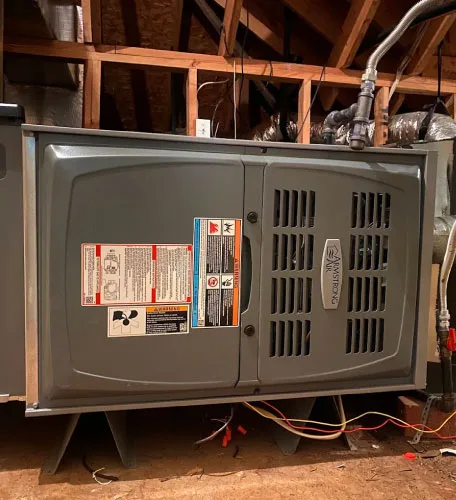
Why Greater Houston Homeowners Trust Us for Furnace Installation
Gas Safety Expertise and Proper Venting
Gas furnace installation isn’t just about hanging a unit in the basement—it requires correct gas line sizing, proper combustion air intake, and safe venting of exhaust gases to the outside. We handle gas line connections to code, verify that your furnace receives adequate fresh air for combustion, and ensure exhaust vents safely away from your home and your neighbors’. Carbon monoxide leaks happen when venting is improperly installed; we eliminate this risk through meticulous attention to safety protocols.
Armstrong Equipment Selection and Warranty
We install Armstrong furnaces, engineered for reliable heating with durable burners and heat exchangers designed to last 15–20 years. Armstrong equipment carries comprehensive warranties, and we handle all registration and documentation so you have full manufacturer support. Your new furnace is backed by LMH Services’ 1-year labor warranty and Armstrong’s equipment warranty, with extended parts-and-labor coverage available through JB Warranties. Many homeowners pair furnace installation with our maintenance plans to protect their investment long-term.
Proper Furnace Sizing for Houston’s Mild Heating Season
Houston winters are mild compared to northern climates, but sizing matters. An oversized furnace wastes energy and cycles inefficiently; an undersized furnace struggles on rare cold snaps. We calculate your home’s heating load—accounting for insulation, square footage, window types, and Houston’s typical winter temperatures—and install equipment that handles your climate efficiently without oversizing or undersizing.
Complete Installation to Code With All Permits
We pull all necessary permits, complete electrical and gas inspections, and ensure your installation meets local codes and manufacturer standards. Permitting protects both your home’s value and safety; it also ensures warranty coverage. We handle all documentation so you have proof of compliant installation for future reference.
Thorough Safety Testing Before Handoff
Before we leave, we test your new furnace under full load, verify gas pressure and ignition performance, run carbon monoxide testing around the furnace and throughout your home, and confirm safe operation. You won’t discover safety issues weeks later—we catch and address everything during installation.
Proud Members of Our Local Chambers of Commerce



What Houston-Area Homeowners Say
Our Furnace Installation Process
From the first heating-load calculation to the final safety testing, every step is documented and done to code — so your new system performs safely from day one.
We visit your home to understand your heating needs comprehensively. We measure square footage, evaluate insulation in your attic and walls, assess window types and orientation, and review your current heating system (if replacing an existing furnace). We also discuss your comfort preferences: do you want a smart thermostat? Zoning capabilities for different temperature setpoints in different areas?
Using this data, we calculate your home’s heating load in BTUs (British Thermal Units)—the amount of heating capacity needed to maintain your desired temperature during Houston’s coldest nights (typically 32°F or below, rarely sustained). This calculation is critical because furnace sizing has a direct impact on efficiency and comfort:
- Undersized Furnace: A unit too small won’t heat your home to 70°F on the coldest winter nights. You’ll have cold spots and complaints, and the furnace will run continuously without reaching setpoint—wasting energy and wearing out prematurely.
- Oversized Furnace: A unit too large cycles on and off frequently (short-cycling), which wastes energy and creates temperature swings. Additionally, an oversized furnace may not run long enough to fully remove humidity from your home’s air during heating season.
We size equipment to match your home’s actual heating load using industry-standard Manual J calculations, ensuring efficient operation throughout winter without oversizing or undersizing.
We present furnace options at different efficiency levels, explaining the long-term costs and benefits of each:
- Standard Efficiency Furnaces (80–85% AFUE) — Entry-level efficiency; lower upfront cost. Over 15 years, higher gas bills offset the purchase price savings. Good for homeowners on a tight budget or planning to move soon.
- High-Efficiency Furnaces (90–94% AFUE) — Modern condensing furnaces that extract more heat from combustion gases. Significantly lower gas bills over time; moderate upfront premium. Most homeowners choosing a long-term investment select this tier for better payback.
- Premium Efficiency Furnaces (95%+ AFUE) — Top-tier efficiency with minimal energy waste. Highest upfront cost; best payback if you plan to stay in your home 15+ years. Worth considering if energy savings are a priority.
We calculate payback periods for each efficiency tier using your home’s typical gas usage, so you understand the financial impact of choosing higher efficiency.
We also discuss thermostat options: basic non-programmable (simple, affordable), programmable (set different temperatures for different times/days), or smart (app control, learning capability, integration with other smart home systems). Smart thermostats are increasingly popular and often pay for themselves through energy optimization.
We explain financing through Wisetack, answering questions about monthly payments and interest rates so you understand total cost of ownership. Once you select equipment, thermostat, and financing, we order the system and schedule installation.
Many homeowners combine furnace installation with central air conditioning upgrades or heat pump systems to create fully integrated year-round comfort solutions.
Before installation, we evaluate your gas lines and mechanical space to ensure proper furnace placement and gas supply. We check for:
- Gas Line Sizing — Existing gas lines must be adequately sized for your new furnace’s BTU input. If current lines are undersized, we upgrade them to code specifications so gas flow is unrestricted and combustion is efficient.
- Combustion Air Availability — Furnaces need fresh air for combustion. We verify that your mechanical space (basement, utility closet, or attic) has adequate fresh air intake—either through room vents or ducted intake from outside. Insufficient combustion air reduces efficiency and can create safety hazards.
- Venting Setup — We evaluate your existing chimney, flue pipe, or vent stack to determine if it’s suitable for your new furnace. Some furnaces vent through an existing chimney; others use dedicated side-wall vents. We ensure venting is code-compliant and safe.
- Clearances for Access and Service — Furnaces need adequate clearance around them for installation, maintenance, and future service. We verify that your installation location allows proper access for technicians to perform future repairs or tune-ups.
If gas lines, venting, or combustion air need upgrades, we provide a detailed estimate upfront so you understand costs before we proceed.
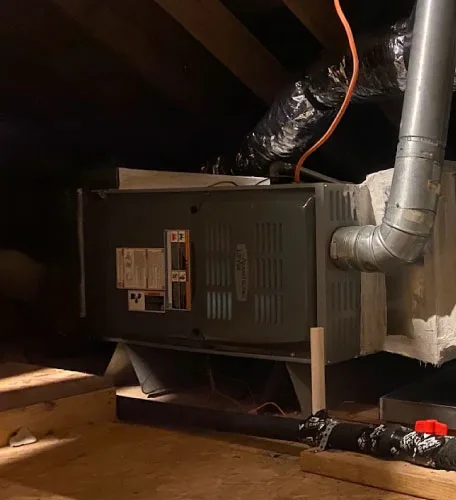
We install your new furnace in the designated location (basement, attic, utility closet) on a proper support base. We connect the gas line from your meter or existing line to the furnace, using code-approved materials and proper sizing. All gas connections are tightened securely and pressure-tested to ensure no leaks.
We install the furnace blower compartment, ensure all electrical connections are tight and properly sized, and verify the thermostat control wiring is correct. We install the flue pipe or vent connection, ensuring it’s properly sealed and insulated where it passes through cold spaces (attics, exterior walls) to prevent condensation and heat loss.
All work follows local mechanical and gas codes. We don’t cut corners or take shortcuts that void your warranty.
Once the furnace is physically installed, we run initial startup tests:
- Thermostat Calibration — We set the thermostat to call for heat and confirm the furnace ignites properly. We verify that the burner lights, the blower motor starts, and heated air flows through your ducts.
- Gas Pressure Verification — We measure gas pressure at the furnace inlet using a manometer to confirm it matches manufacturer specifications. Incorrect gas pressure causes inefficient combustion and poor performance.
- Heat Exchanger Inspection — We visually inspect the heat exchanger for any cracks or defects before we run the system under load. A cracked heat exchanger is a safety issue and must be replaced immediately.
- System Cycle Test — We run the furnace through a complete heating cycle: thermostat calls for heat, the igniter glows and lights the burner, the blower motor circulates warm air, and the system cycles off when the setpoint is reached. We verify smooth cycling and proper response to thermostat commands.
Safety is paramount. We test for carbon monoxide and gas leaks before handing off your new furnace:
- Carbon Monoxide Testing — We place CO detectors in the furnace area and throughout your home, running the furnace under load and monitoring for any CO leaks. A properly operating furnace produces no detectable CO; if we find any, we immediately address the issue (usually venting related). This test is non-negotiable—carbon monoxide poisoning is a serious health hazard.
- Gas Leak Detection — We use a sensitive gas detector to inspect all gas line connections, the furnace inlet, and the gas valve. We check for any leaks that could pose a safety or efficiency risk.
- Backdraft Testing — We verify that the furnace venting doesn’t create negative pressure that could pull dangerous gases into your home. This test ensures your furnace exhausts safely to the outside.
With the furnace running, we verify that warm air flows properly through your ductwork. Proper ductwork is as critical to furnace performance as the furnace itself—a well-sealed, insulated duct system ensures your heating reaches every room efficiently. If you’re considering indoor air quality improvements or duct cleaning, the installation period is an ideal time to plan those upgrades.
- Duct Leaks and Sealing — If we notice significant duct leaks during operation (indicated by uneven heating or weak airflow in some rooms), we seal visible leaks with mastic sealant to prevent warm air loss.
- Thermostat Accuracy — We confirm that your thermostat is reading room temperature correctly and responding properly to setpoint changes. A miscalibrated thermostat can cause short-cycling or failure to reach desired temperatures.
- System Balance — We check that warm air reaches all areas of your home—living rooms, bedrooms, kitchens—without dead spots or weak flow. If necessary, we adjust dampers to balance airflow.
Before we leave, we explain how your new furnace operates: how to adjust the thermostat, what to expect seasonally (when heating season typically runs in Houston; when to schedule pre-winter maintenance), how to maintain the system (filter changes, when to call us for service), and what warranty coverage includes.
We provide all documentation:
- Equipment specification sheets
- Installation records and completion certificates
- Warranty information and manufacturer contact details
- Thermostat instruction manual
- Maintenance plan options and enrollment information
We also walk you through a pre-winter maintenance schedule and explain why annual furnace tune-ups are essential to prevent winter breakdowns when you need heat most.
Ready for Professional Furnace Installation?
Upgrading to a new, efficient furnace is an investment in reliable winter heating and peace of mind. Contact us for a home assessment, equipment options, and installation scheduling. Don’t forget to ask about available financing options or our current specials and rebates.
Financing Your New Furnace System
A new gas furnace is a smart long-term investment — and it shouldn’t strain your budget. LMH Services partners with Wisetack for flexible financing, so you can install the efficient, properly-sized system your home needs and pay over time.
Financing Benefits


LMH Services has partnered with Wisetack to give you more ways to pay. Wisetack lets you check your options in seconds with no impact to your credit score, and offers simple monthly payment plans without the financial stress.
Keep Your System Running Strong with a Maintenance Plan
Protect your new furnace investment. A maintenance plan from LMH Services keeps your system efficient, extends its 15–20 year lifespan, and catches small issues before they become costly failures — for both Deer Park homes and businesses across the greater Houston area.
Our Maintenance Plans Include
24 Hour Service Available
Plan members get priority access to our 24/7 emergency service line
Prompt, Local Service
We are locally operated in Deer Park and respond quickly
Expert Technicians & Installers
Thorough inspections that catch small issues before they become expensive repairs
Residential & Commercial
Plans tailored to homeowners and business owners alike
Furnace Installation Across Greater Houston
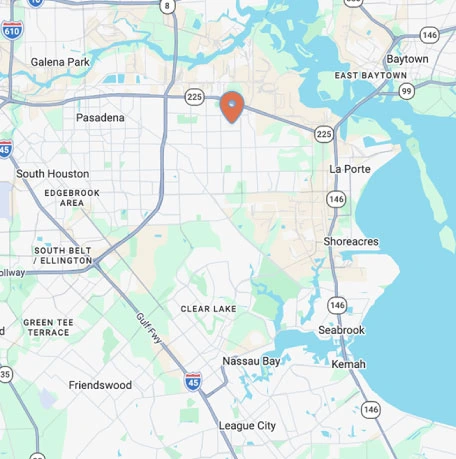
LMH Services installs new gas furnace systems throughout the greater Houston area from our home base in Deer Park, TX. Wherever you are in our service area, you get the same proper sizing, gas line setup, and safety-backed workmanship.
Serving Communities Around:
Not Sure If We Service Your Area?
Chances are we can help! We’ve served the southern Houston area for a while, so please call 832-800-4564 or contact us today to see if we come out to your area.
Furnace Installation Questions Homeowners Ask
A typical furnace installation takes 1–2 days. Day one involves furnace installation, gas line connection, venting setup, and electrical work. Day two includes all testing, commissioning, thermostat setup, and customer training. We coordinate timing with you in advance and work efficiently to minimize disruption.
AFUE (Annual Fuel Utilization Efficiency) measures what percentage of fuel energy converts to usable heat. An AFUE 90 furnace converts 90% of fuel to heat; an AFUE 95 furnace converts 95%. The difference means an AFUE 95 furnace saves about 5% on annual gas bills—which compounds over 15–20 years. The higher upfront cost typically pays back through energy savings if you stay in your home long-term.
Not always. We evaluate your existing venting during the assessment. If it’s in good condition and properly sized for your new furnace, you can reuse it. If the existing chimney is cracked, undersized, or incompatible with your new equipment, we install a dedicated vent pipe. We size venting to code and ensure safe exhaust to the outside.
Yes. We can install a furnace in a home without existing heating infrastructure, though it requires gas line installation (if no gas service exists) and ductwork for air distribution. If your home has no ductwork and is cooling-only with an AC unit, you’d need to consider either installing ductwork (disruptive and expensive) or choosing a ductless system like a heat pump or mini-split. We discuss all options and costs upfront.
No. Gas furnace installation requires permits, gas fitting certification, and safety testing for carbon monoxide and gas leaks. DIY installation voids manufacturer warranty and creates serious safety hazards. We handle all installation work to code, with full documentation, permits, and warranty coverage. Never attempt gas furnace installation without professional help.
Annual pre-winter tune-ups are essential. Our maintenance visits include burner cleaning, ignition system testing, heat exchanger inspection, blower motor check, airflow verification, thermostat calibration, safety limit switch testing, and carbon monoxide testing. Annual service prevents winter breakdowns and extends furnace lifespan.
Both options work well in Houston. Gas furnaces are reliable, provide fast heat, and have low operating costs in our mild heating season. Heat pumps handle both heating and cooling efficiently and eliminate the need for a separate AC unit. The choice depends on your preference, budget, and long-term plans. We explain the advantages of each so you can decide what’s best for your situation.
We verify heating performance before we finish installation. If the system isn’t heating to spec, we diagnose and fix the problem immediately—whether it’s a gas pressure issue, thermostat malfunction, or equipment defect. Our work is warranted, so we stand behind every installation.
Yes. We pull all required mechanical and gas permits, schedule inspections with your local authority, and ensure your installation is documented and compliant. Permits protect your home’s value and ensure warranty coverage.
Quality gas furnaces last 15–20 years with regular maintenance. Armstrong furnaces we install are engineered for this range. After 15 years, repair costs often climb as components wear. Proper maintenance (annual tune-ups, timely repairs) extends furnace lifespan and delays replacement significantly.
Yes. Your Armstrong equipment carries the manufacturer’s parts warranty, and our installation work is covered by LMH Services’ 1-year labor warranty. For protection beyond the first year, we offer extended parts-and-labor plans through JB Warranties — no deductible, all brands, and transferable to a new owner at no charge. We register your equipment and provide all documentation so you know exactly what is covered.
Get Professional Furnace Installation in Greater Houston
We size every system to your home’s actual heating load with industry-standard Manual J calculations — never rule-of-thumb guesses. Correctly-sized equipment runs efficiently, heats evenly, and lasts its full 15–20 year life.
We install Armstrong furnaces backed by the manufacturer’s parts warranty and our own 1-year labor warranty, pull all permits, and complete every inspection. Extended parts-and-labor protection is available through JB Warranties, and we hand you the documentation so your coverage is registered and protected.
Gas furnace installation requires proper gas line sizing, combustion air verification, and safe venting. We handle all gas connections to code and run comprehensive carbon monoxide testing before handoff — your safety is non-negotiable.
Upgrading to efficient, reliable heating shouldn’t strain your budget. We partner with Wisetack for flexible financing, and our maintenance plans keep your new system running efficiently for years.
Before we leave, we show you how your new system operates, what to expect seasonally, and how to maintain it — with all documentation in hand. If you’re ready to upgrade your home’s heating, contact us today.