
Heat Pumps: Year-Round Comfort for Greater Houston Homes
Stay comfortable every season with a heat pump system that heats in winter and cools in summer—using one efficient unit. LMH Services installs, repairs, and maintains ducted heat pump systems for Houston-area homeowners who want energy-efficient climate control and lower utility bills.
Get a Free Estimate
Request service, book online, get a free estimate, ask about financing, or schedule routine maintenance.
Schedule Your Service For urgent issues, calling 832-800-4564 is the fastest way to reach us.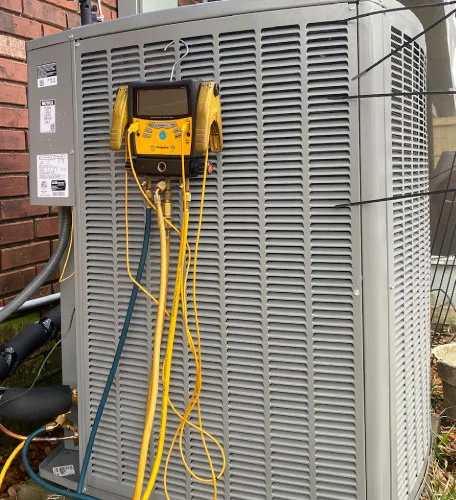
Why Greater Houston Homeowners Choose Heat Pumps
Energy Efficiency That Cuts Bills
Heat pumps move existing heat instead of generating it, using 40–50% less electricity than traditional heating and cooling separately. In Houston’s mild winters and hot summers, a heat pump system adapts to seasonal demands and delivers comfort at a fraction of the cost. Over 10–15 years, the energy savings offset the installation investment.
Authorized Dealer Expertise
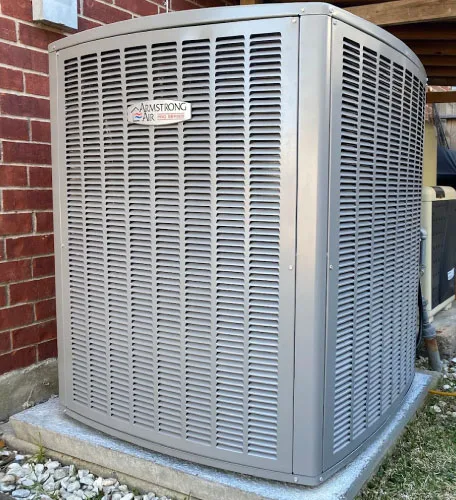
We’re an Armstrong Air Pro Team dealer and factory-certified installer, meaning we’ve earned certification for installations that meet the manufacturers’ highest standards. We understand ductless and ducted systems, their control logic, refrigerant handling, and warranty requirements. Our training ensures your heat pump is installed correctly and performs to its rated efficiency.
Handles Both Heating and Cooling
In Houston, most homeowners think “cooling first”—but heat pumps excel at both. When winter arrives, the system reverses cycle to extract heat from outside air and deliver it indoors. You don’t need a separate furnace, and you get more consistent comfort than switching between heating and cooling systems.
Real Troubleshooting and Repair Know-How
Heat pumps use refrigerant-based heating and cooling, which means diagnostics are more complex than simple furnace repairs. Our EPA-certified technicians read pressure readings, test reversing valves, and diagnose defrost cycle issues. We don’t replace parts guessing—we find the actual failure and fix it.
Quiet Operation and Zoning Flexibility
Heat pump systems, especially ducted units, run quietly compared to furnaces. If you add a zoning system, you can heat and cool different home areas independently—no wasting energy heating rooms you’re not using.
Proud Members of Our Local Chambers of Commerce



What Houston-Area Homeowners Say
Heat Pump Services We Provide
Whether you’re installing a new system, need emergency repair, or want a maintenance tune-up, LMH Services is ready. Contact us to discuss your options or schedule a visit.
Choosing a heat pump requires understanding your home’s existing ductwork, insulation, heating and cooling needs, and long-term comfort goals. We don’t just size equipment; we evaluate your home’s thermal profile, identify duct leaks and air infiltration, and design a system that delivers consistent comfort while maximizing energy savings.
Our installation process begins with a detailed site survey. We measure your home’s square footage, assess insulation levels, review your existing ductwork for capacity and leakage, and discuss your preferences for temperature control and zoning. We then recommend equipment sized correctly for your home’s load, explain efficiency ratings (HSPF for heating, SEER for cooling), and walk you through control options—programmable thermostats, smart thermostats with app control, or zoning systems that heat and cool different areas independently.
Once you’ve approved the system, we install to manufacturer specification, seal all electrical connections, charge the refrigerant to exact specifications, balance airflow through your ducts, and perform a full system test before we leave. You’ll receive complete documentation, warranty information, and guidance on system operation and maintenance. Learn more about heat pump installation.
When a heat pump stops heating, cools poorly, or cycles erratically, diagnosis requires precision and specialized knowledge. Heat pump failures often stem from refrigerant issues, electrical problems, or mechanical component wear—each requiring different troubleshooting approaches.
Our technicians arrive with diagnostic equipment to measure refrigerant pressure, test electrical continuity, evaluate the reversing valve (which switches between heating and cooling), inspect the defrost cycle (which prevents frost buildup on winter mornings), and check control board performance. We explain what we find—not with technical jargon, but in terms of what your system is doing wrong and why. We then provide repair options with upfront pricing so you can decide whether a repair or replacement makes sense.
Common repairs include refrigerant recharges after leak repair, reversing valve replacement, compressor work, electrical component replacement, and control board reprogramming. We stock common parts and keep emergency service lines open so you’re not without heating or cooling longer than necessary. Discover our heat pump repair process.
Regular maintenance keeps your heat pump running efficiently and extends its service life to the full 15–20 year design life. Skipped maintenance accelerates wear, reduces efficiency, and increases repair costs—often triggering early replacement when maintenance would have prevented failure.
Our maintenance visits include refrigerant pressure checks (to catch slow leaks early), capacitor testing (to prevent electrical startup failures), coil cleaning (to restore heat transfer), filter replacement (to preserve airflow), electrical connection inspection (to prevent arcing and burnout), thermostat calibration (to ensure accurate temperature control), and full system cycling verification (to confirm both heating and cooling modes work smoothly).
We perform these checks on both the indoor unit (furnace-like cabinet with coils and blower) and outdoor unit (condenser with compressor and coil). We document our findings and discuss any issues we discover—paying special attention to early warning signs like slow refrigerant pressure loss or slight electrical anomalies that, if caught early, prevent catastrophic failures. See what’s included in heat pump maintenance.
Summer Cooling — The outdoor unit absorbs heat from your home’s air and expels it outside, while the indoor unit distributes cool air through your ducts. This is similar to air conditioning, but more efficient because modern heat pumps use variable-speed compressors that adjust output to demand rather than cycling on and off.
Winter Heating — The system reverses cycle. The outdoor unit extracts heat from outside air—yes, even cold air contains thermal energy that can be harvested—and moves it indoors through refrigerant lines. Houston winters are mild, with temperatures rarely dropping below 40°F, which means heat pumps operate at peak efficiency during the season you need heating most.
Defrost Cycle — On the coldest winter mornings, frost can form on the outdoor coil, reducing heat transfer and temporarily lowering heating capacity. The system detects this frost buildup using a thermostat sensor and briefly reverses to cooling mode, using outdoor coil heating to melt the ice. This cycle typically lasts 5–15 minutes and happens automatically.
Repair usually makes sense if:
- Your system is under 12 years old (it’s still in the prime of its service life)
- The repair cost is less than 40% of a new system price (the math favors fixing over replacing)
- It’s a single component failure like a compressor, reversing valve, or control board (not multiple simultaneous issues)
- Your energy bills haven’t climbed noticeably (the system is still efficient)
Replacement becomes the smarter choice if:
- Your system is 15+ years old (typical service life for quality units; repair costs often accelerate)
- The repair cost exceeds 50% of new equipment price (you’re paying replacement cost for a patch)
- The system has needed multiple repairs in 2 years (sign that other components will soon fail)
- Your energy bills have increased 20% or more—newer systems are 40–50% more efficient, paying for themselves over 8–12 years through reduced utility costs
Ready to Upgrade to a Heat Pump?
Heat pumps offer Houston homeowners a powerful combination: year-round comfort, lower energy bills, and quieter operation than traditional HVAC systems. Whether you’re installing a new system, repairing an existing one, or maintaining peak efficiency, LMH Services brings genuine expertise and transparent pricing.
Financing Your Heat Pump System
A heat pump system is a smart long-term investment that pays for itself through energy savings — and it shouldn’t strain your budget. LMH Services partners with Wisetack for flexible financing, so you can install the efficient system your home needs and pay over time.
Financing Benefits


LMH Services has partnered with Wisetack to give you more ways to pay. Wisetack lets you check your options in seconds with no impact to your credit score, and offers simple monthly payment plans without the financial stress.
Keep Your System Running Strong with a Maintenance Plan
Protect your heat pump investment. A maintenance plan from LMH Services keeps your system efficient, extends its 15–20 year lifespan, and catches small issues before they become costly failures — for both Deer Park homes and businesses across the greater Houston area.
Our Maintenance Plans Include
24 Hour Service Available
Plan members get priority access to our 24/7 emergency service line
Prompt, Local Service
We are locally operated in Deer Park and respond quickly
Expert Technicians & Installers
Thorough inspections that catch small issues before they become expensive repairs
Residential & Commercial
Plans tailored to homeowners and business owners alike

Heat Pump Service Across Greater Houston
LMH Services installs and services heat pump systems throughout the greater Houston area from our home base in Deer Park, TX. Wherever you are in our service area, you get the same proper sizing, ductwork evaluation, and warranty-backed workmanship.
Serving Communities Around:
Not Sure If We Service Your Area?
Chances are we can help! We’ve served the southern Houston area for a while, so please call 832-800-4564 or contact us today to see if we come out to your area.
Heat Pump Questions Greater Houston Homeowners Ask
Heat pumps typically use 40–50% less energy than traditional systems because they move heat rather than generate it. For Houston homeowners, savings are largest in heating season (winter), where heat pump efficiency far exceeds electric resistance heating. Your actual savings depend on your current system’s age and efficiency, but most customers see utility bills drop 20–35% after upgrading to a modern heat pump.
Ducted heat pumps require ducts like traditional AC systems. If you don’t have ducts, you can install a mini-split system (ductless) instead, which delivers heating and cooling to individual rooms without ductwork. We design both types. If you have existing ducts, we evaluate their condition and seal leaks before installing a new heat pump.
Heat pumps work well in mild climates like Houston, where winters rarely drop below 40°F. In colder regions, a backup electric heater kicks in, reducing efficiency during extreme cold. Houston’s winter temperatures make heat pumps ideal—they’ll keep your home warm without electric resistance heating, maximizing savings.
Ducted heat pumps use existing ductwork to distribute heat and cooling throughout your home—similar to air conditioning. Mini-splits are ductless systems that mount on walls in individual rooms, each with its own control. Ducted systems heat/cool your whole home uniformly; mini-splits offer room-by-room control. Both use the same heat pump technology but suit different homes and preferences.
Once yearly, ideally before heating season begins—in fall. Annual maintenance includes refrigerant checks, coil cleaning, electrical testing, and defrost cycle verification. If you use the system heavily or live in dusty areas, twice-yearly service (spring and fall) provides extra protection and ensures peak efficiency.
Usually, yes—but we need to evaluate your ducts first. We check for leaks, proper sizing, and balancing. Leaky or undersized ducts reduce a new heat pump’s efficiency. Sometimes sealing ducts is enough; sometimes partial duct upgrades make sense. We show you the trade-offs and costs so you decide what makes sense for your budget.
In Houston, yes. Even on the coldest winter mornings (around 40°F), a properly sized and maintained heat pump will deliver adequate warmth. Modern heat pumps include defrost cycles to manage frost buildup and maintain heating performance. If you lived in Minnesota, you’d need backup heating; in Houston, the heat pump handles the job.
Quality heat pump systems last 15–20 years with regular maintenance. The units we install from Armstrong and Samsung are engineered for that lifespan. Like AC systems, repair costs often climb after 15 years, making replacement more economical than repeated fixes.
The main difference is reversibility. AC only cools; a heat pump cools and heats by reversing its cycle. Both use refrigerant and require similar maintenance and repair expertise. Heat pumps are more complex (they have a reversing valve and defrost cycle), but their efficiency and year-round capability make the added complexity worthwhile.
A properly installed heat pump has correct refrigerant charge (verified by pressure testing), sealed electrical connections, balanced airflow through ducts, and a control system that cycles smoothly between heating and cooling. We perform a full startup check and system test before leaving—documenting everything for your warranty.
Get Professional Heat Pump Service in Greater Houston
Heat pumps move existing heat instead of generating it, using 40–50% less electricity than traditional heating and cooling separately. In Houston’s mild winters and hot summers, a heat pump system adapts to seasonal demands and delivers comfort at a fraction of the cost.
We’re an Armstrong Air Pro Team dealer and factory-certified installer, meaning we’ve earned certification for installations that meet the manufacturers’ highest standards. We understand ductless and ducted systems, their control logic, refrigerant handling, and warranty requirements.
In Houston, most homeowners think “cooling first”—but heat pumps excel at both. When winter arrives, the system reverses cycle to extract heat from outside air and deliver it indoors. You don’t need a separate furnace.
Heat pumps use refrigerant-based heating and cooling, which means diagnostics are more complex than simple furnace repairs. Our EPA-certified technicians read pressure readings, test reversing valves, and diagnose defrost cycle issues.
Financing is available for new heat pump installations, helping you spread the investment over time. Our maintenance plans prevent costly breakdowns and keep your system running at peak efficiency.