
Whole Home Generator Installation in Greater Houston
Power outages don’t just inconvenience—they threaten comfort, security, and safety. A professionally installed whole-home generator automatically detects an outage and powers your home within seconds, keeping appliances running, sump pumps operating, and air conditioning working until utility power returns. LMH Services handles complete generator installation: equipment selection, electrical sizing, concrete pad placement, fuel tank setup, electrical integration, permits, inspections, and full startup testing.
Get a Free Estimate
Request service, book online, get a free estimate, ask about financing, or schedule routine maintenance.
Schedule Your Service For urgent issues, calling 832-800-4564 is the fastest way to reach us.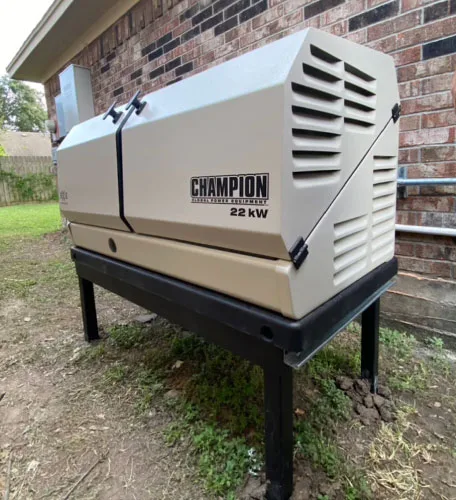
Why Professional Generator Installation Matters
Right-Sized System for Your Home’s Needs
We install and service Generac and Champion standby generators, then size the system to your home’s essential loads—HVAC, water heater, refrigerator, well pump (if applicable), garage door opener, and security systems. Undersizing leaves critical systems unpowered during an outage. Oversizing wastes fuel and money. We calculate your home’s peak load demand, select a generator sized to handle it, and design electrical switchover logic so the generator runs efficiently without overloading.
Safe Electrical Integration with Automatic Switchover
A generator must connect to your home’s electrical system safely, never back-feeding power to utility lines (which hazards line workers). We install a transfer switch that automatically detects outages, stops utility power input, engages generator power, and restores utility power when it returns—all without manual intervention. This is a critical safety component many DIY installs get wrong.
Proper Fuel Supply and Tank Placement
Whole-home generators run on natural gas or propane. We determine fuel availability at your home, install underground or above-ground fuel lines to code, size the tank for your usage patterns, and ensure fuel delivery, inspection, and certification. Improper fuel lines are a safety and efficiency hazard.
Professional Electrical Installation and Code Compliance
Installation involves running conduit from the generator to your electrical panel, sizing breakers and wiring to generator capacity, hooking into your transfer switch, and meeting all local electrical codes. We pull permits, coordinate inspections, and document everything so your installation is legal, safe, and insurable.
Full System Testing and Backup Power Assurance
We test the generator under load, verify automatic switchover function, check fuel consumption, confirm all protected circuits work, and document performance. You’ll know your system runs reliably before the next storm.
Proud Members of Our Local Chambers of Commerce



What Houston-Area Homeowners Say
Our Generator Installation Process
From the first load calculation to the final system test, every step is documented and done to code — so your backup power system performs when you need it most.
We visit your home to understand your backup power needs. We review your electrical panel, identify which circuits you want to power during an outage (HVAC, refrigerator, well pump, water heater, security system, garage doors, lights), and measure current consumption of each load.
We calculate peak demand in kilowatts—the maximum simultaneous load your generator must supply. This is critical because some appliances (air conditioners, compressors) draw high surge current when starting, so peak demand often exceeds sustained demand.
We also assess fuel availability at your home:
- Natural Gas — If your home has natural gas service, a natural gas generator is ideal: fuel is delivered via existing lines, no tank storage needed, automatic fuel supply during extended outages.
- Propane — If natural gas isn’t available, we install a propane generator with an above-ground or buried propane tank sized for your usage. We coordinate with propane suppliers for regular refill service.
- Diesel — Less common for residential but an option for larger homes or special requirements.
We discuss generator placement: typically outside the home (patio, side yard, or corner location) where noise and exhaust are away from living spaces, but accessible for maintenance and fuel refill.
Based on your load calculation and fuel source, we present generator options with different power ratings (18 kW, 24 kW, 38 kW, etc.), explaining the trade-offs:
- 18–20 kW systems power essential circuits (heating/cooling, refrigerator, water heater, lights, well pump) in most homes. Entry-level cost, sufficient for sustained outages.
- 24–30 kW systems add capacity for higher simultaneous loads or future expansion (EV chargers, additional HVAC zones).
- 38+ kW systems power nearly all home circuits, mimicking full utility power during outages. Premium cost but maximum convenience.
We calculate fuel consumption estimates, showing monthly propane usage or natural gas usage patterns, so you understand ongoing fuel costs during extended outages.
We also discuss transfer switch options: standard automatic transfer (detects outage, switches power, restores utility when available) or manual transfer (you flip a switch when needed—less common but cheaper for non-critical backup).
We explain financing programs through Wisetack so you understand payment options and can budget for the installation.
Once you approve the generator size, fuel type, and financing, we order equipment and schedule installation.
Before generator delivery, we prepare the installation site. For propane generators, we pour a concrete pad (4’×4’ typically) at the location you approved, ensuring proper drainage away from the home and level placement for stability.
We also assess electrical conduit routing from the generator location to your electrical panel—the path for power wires, control wires, and fuel lines. We coordinate with your municipality if underground conduit is needed.
For natural gas generators, we assess existing gas line routing and determine if we need to extend service to the generator location (usually simpler since the line already exists).
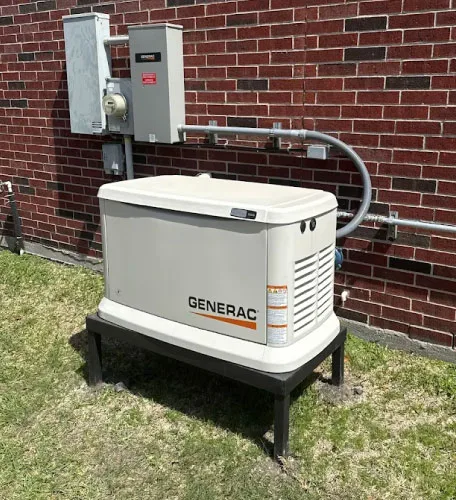
We install the generator on the pad (or at the chosen location) and secure it per manufacturer specs. We install the automatic transfer switch in your electrical panel, which detects utility outages and switches power between utility and generator.
We run electrical conduit from the generator to the transfer switch, sized for the generator’s current output. We install all required breakers, disconnect switches, and safety components.
For propane systems, we install the fuel line from the tank to the generator, sized correctly for fuel flow and pressure requirements. For natural gas systems, we extend the gas line from your meter to the generator, ensuring proper sizing and pressure regulation.
All electrical work follows local electrical code. We pull permits and coordinate inspections before powering on.
We program the transfer switch logic: how quickly to detect an outage, how long to wait before engaging the generator (to avoid nuisance switches during brief flickers), and how to maintain generator runtime health.
We configure any remote monitoring if your generator supports it (smartphone app alerts, status monitoring, usage history).
We test the generator under load: start it manually, verify it runs smoothly, measure output voltage and frequency, then engage the transfer switch. We simulate an outage by disconnecting utility power and confirming the generator picks up your essential loads automatically.
We test automatic restart: when utility power returns, the transfer switch should smoothly switch back to utility power and shut down the generator.
We verify that all circuits you wanted protected are actually powered by the generator. We test each room: lights, outlets, HVAC operation, refrigerator, well pump (if applicable), security system. We confirm the generator is powering them and that they operate normally.
We also verify that circuits NOT on the generator (like a pool pump or electric vehicle charger) are properly blocked, so the generator doesn’t attempt to power them and overload.
Before we finish, we explain how your generator operates: how to recognize an automatic switchover (you may not even notice it), how to check fuel levels or propane tank status, routine maintenance intervals (oil changes, filter replacements, annual testing), and what to do if the generator doesn’t start during an outage.
We provide all documentation: equipment manuals, electrical permits and inspection records, transfer switch settings, maintenance schedule, warranty information, and our contact info for future service.
We also discuss optional generator maintenance plans—annual inspections and testing ensure your backup power system is always ready.
Ready to Install Whole-Home Backup Power?
Power outages are unpredictable, but your protection shouldn’t be. A whole-home generator ensures your family stays safe, comfortable, and connected when grid power fails. Contact us for a home assessment, fuel-source evaluation, and complete installation estimate.
Financing Your Generator Installation
A whole-home generator is a smart investment in your family’s safety and comfort — and it shouldn’t strain your budget. LMH Services partners with Wisetack for flexible financing, so you can install the backup power system your home needs and pay over time.
Financing Benefits


LMH Services has partnered with Wisetack to give you more ways to pay. Wisetack lets you check your options in seconds with no impact to your credit score, and offers simple monthly payment plans without the financial stress.
Keep Your System Running Strong with a Maintenance Plan
Protect your generator investment. A maintenance plan from LMH Services keeps your backup power system ready, extends its lifespan, and catches small issues before they become costly failures — for both Deer Park homes and businesses across the greater Houston area.
Our Maintenance Plans Include
24 Hour Service Available
Plan members get priority access to our 24/7 emergency service line
Prompt, Local Service
We are locally operated in Deer Park and respond quickly
Expert Technicians & Installers
Thorough inspections that catch small issues before they become expensive repairs
Residential & Commercial
Plans tailored to homeowners and business owners alike
Generator Installation Across Greater Houston
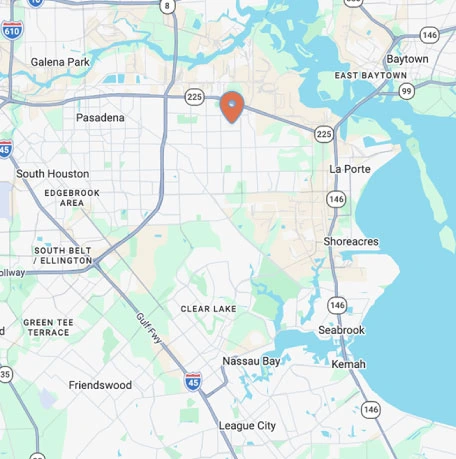
LMH Services installs whole-home backup power systems throughout the greater Houston area from our home base in Deer Park, TX. Wherever you are in our service area, you get the same proper sizing, electrical integration, and warranty-backed workmanship.
Serving Communities Around:
Not Sure If We Service Your Area?
Chances are we can help! We’ve served the southern Houston area for a while, so please call 832-800-4564 or contact us today to see if we come out to your area.
Generator Installation Questions Homeowners Ask
It depends on which loads you want to power during an outage. An essential-loads system (heating, refrigerator, water heater, critical lighting, well pump) typically needs 18–24 kW. A whole-home system powering nearly all circuits needs 30–38 kW. We calculate your specific load during the assessment so you know the exact power requirement.
Natural gas generators draw fuel from your existing gas line—no tank storage, automatic fuel supply, simpler installation. Propane generators require an installed propane tank and periodic refill service but work where natural gas isn’t available. Natural gas is typically cheaper over time; propane is more portable but requires more maintenance. We help you evaluate both.
A natural gas generator can run indefinitely as long as gas supply is available. A propane generator runs as long as your tank has fuel—a 500-gallon tank powering essential loads might run 2–4 weeks. We size tanks and estimate runtimes based on your expected outage duration and usage patterns.
No. A standby generator only runs during power outages. During normal utility power, it’s silent and uses no fuel. When the outage ends and utility power returns, the generator shuts down automatically. Your electric bill only includes utility power consumption.
No. Portable generators produce carbon monoxide, which is extremely toxic indoors. They must run outside, at least 20 feet away from windows and doors. A whole-home standby generator is the safe, permanent solution for whole-home backup power.
Yes. Whole-home generators require electrical permits (for transfer switch and electrical integration) and potentially gas or propane permits (for fuel line installation). We handle all permitting and coordinate inspections to ensure your installation is legal and safe.
Annual professional inspections, oil changes, filter replacements, and load testing keep your generator ready. We recommend our generator maintenance plans to ensure your backup system is always operational when you need it.
Installation costs depend on generator size, fuel type, electrical work required, and site preparation. We provide a detailed quote after our home assessment so you know the investment before we proceed. Financing is available to make the installation affordable.
No. Insurance companies typically approve properly installed generators because they reduce risks during extended outages. They may even offer discounts for homes with backup power. Confirm with your insurer, and provide documentation of our professional installation.
Yes. If you install a generator now and need more capacity later, we can upgrade the system. Transfer switch logic can often be adjusted to accommodate a larger generator without full reinstallation.
Yes. Generac and Champion generators carry the manufacturer’s equipment warranty, and our installation and electrical work is covered by LMH Services’ 1-year labor warranty. We register your equipment and provide all documentation so you know exactly what is covered.
Protect Your Home with Professional Generator Installation
We calculate your home’s peak load demand and select a generator sized to handle it efficiently. No undersizing that leaves critical systems unpowered, no oversizing that wastes fuel and money — just the right capacity for your essential loads.
We install transfer switches that automatically detect outages and safely switch between utility and generator power without back-feeding. Professional electrical integration protects line workers and ensures your system operates safely and legally.
Whether natural gas or propane, we install fuel systems to code with proper sizing, pressure regulation, and safety components. We coordinate with fuel suppliers and handle all permits so your generator has reliable fuel delivery.
Protecting your home with backup power shouldn’t strain your budget. We partner with Wisetack for flexible financing, and our maintenance plans keep your generator ready for years.
We test your generator under load, verify automatic switchover, and train you on operation and maintenance. You’ll get all documentation and know your backup power system works reliably before the next storm. Your Generac or Champion generator carries the manufacturer’s warranty, and our installation work is covered by LMH Services’ 1-year labor warranty.