
Mini-Split Maintenance & Tune-Ups in Greater Houston
Your ductless mini-split system runs quietly in the background—until it stops. Annual maintenance catches the small problems that become expensive failures: refrigerant leaks developing at connection points, coils accumulating mold in Houston’s humidity, electrical connectors corroding, compressor strain from dirty filters. LMH Services offers comprehensive mini-split maintenance plans that keep your system running efficiently, extend its useful life to 12+ years, and ensure reliable comfort through scorching Texas summers.
Get a Free Estimate
Request service, book online, get a free estimate, ask about financing, or schedule routine maintenance.
Schedule Your Service For urgent issues, calling 832-800-4564 is the fastest way to reach us.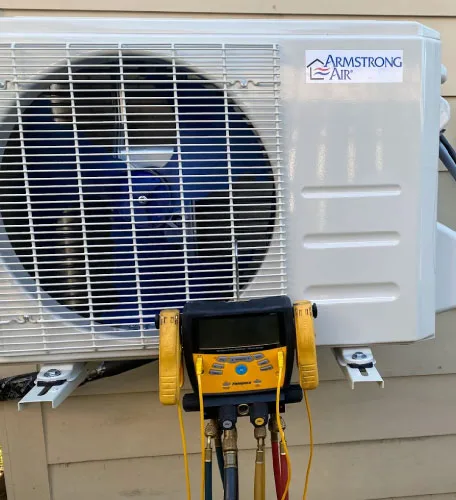
Why Greater Houston Homeowners Choose Preventive Mini-Split Maintenance
Catch Leaks Before They Become System Failures
Refrigerant leaks in mini-splits are silent—you won’t know you have one until cooling performance drops. During annual maintenance, we measure system pressures and perform electronic leak detection on every connection point, condenser coil, and evaporator. Catching a slow leak at 5% charge loss means a quick solder repair; ignoring it until you lose 40% charge means your compressor runs in a damaged state and fails catastrophically. Preventive pressure testing is insurance against major compressor failure and expensive repairs.
Houston’s Humidity Demands Regular Electrical Inspection
The Houston climate creates conditions that corrode electrical connectors on mini-split lines—especially where copper meets aluminum, where moisture and salt air accelerate oxidation. Corroded connectors create voltage drop, prevent proper compressor startup, or cause intermittent failures. During maintenance, we clean, inspect, and protect these connections before they fail. Electrical corrosion prevention is critical for systems operating in coastal humidity.
Coil Cleaning Prevents Mold, Ice Buildup, and Airflow Loss
The indoor evaporator coil removes humidity by condensing it onto the coil surface, then draining water through a condensation line. In Houston’s humid climate, that coil collects mold and dust if not cleaned regularly. Dirty coils restrict airflow, reduce cooling capacity by 15–20%, cause ice buildup, and create musty odors. Annual cleaning maintains efficiency and prevents the health issues associated with mold growth in your HVAC system.
Filter and Drain Maintenance Prevents Capacity Loss and Water Damage
Mini-split indoor units have filters that collect dust and restrict airflow if clogged. The condensation drain line can clog with mold or algae, causing water to back up and leak into your home. During maintenance, we replace filters, flush the drain line, and add drain-line safety switches if needed. These small maintenance tasks prevent efficiency loss and water damage that catches homeowners by surprise.
Veteran-Operated Commitment to Long-Term Equipment Care
We don’t chase emergency repair calls—we prevent them. Our approach to maintenance reflects the discipline of preparation over crisis response. We keep detailed records of your system’s performance, pressure trends, and age-related wear patterns so we catch deterioration early. This proactive stance protects your investment and keeps you comfortable without costly surprises.
Proud Members of Our Local Chambers of Commerce



What Houston-Area Homeowners Say
What’s Included in Our Mini-Split Maintenance Service
From pressure testing to coil cleaning, every step is documented and performed to manufacturer specifications — so your system runs efficiently year after year.
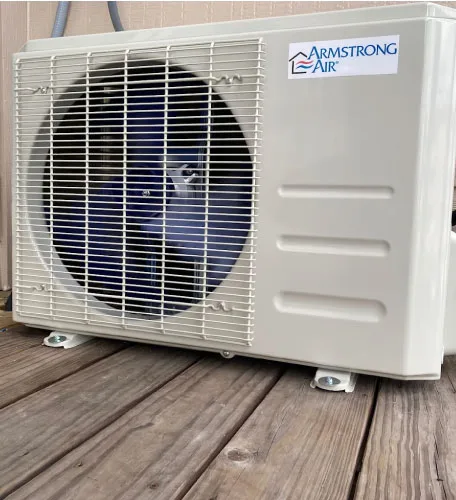
We begin by examining both your indoor and outdoor units visually. Is the outdoor compressor clean and free of debris (leaves, dirt, pollen)? Are refrigerant lines showing any signs of corrosion, damage, or age wear? Is the indoor unit visibly clean or clogged with dust? We photograph any areas of concern so you see exactly what we found.
We connect manifold gauges to your mini-split’s low-side and high-side ports and measure refrigerant pressure under operating conditions. If pressure has drifted since the last service, it indicates a developing leak. We compare readings to your equipment’s specifications and document trends year over year—a slow declining pressure trend reveals a slow leak that maintenance catches before it becomes a failure.
- Pressure stable year-over-year? Your system has no leak. Performance is maintained.
- Pressure declining gradually? You have a slow leak that we’ll locate and repair before it causes complete loss of charge.
- Pressure abnormal? Electrical, airflow, or component issues are present; we diagnose further.
We calculate superheat and subcooling—refrigerant temperature-pressure relationships that reveal exact charge status. These measurements prevent overcharge (which reduces cooling and stresses the compressor) and undercharge (which reduces capacity and causes ice buildup). Many contractors skip this step; we measure every system because precision charge maintenance extends equipment life.
We inspect all electrical connections on the refrigerant lines, outdoor compressor terminals, and indoor unit wiring for corrosion, loose connections, or burn marks. Houston’s salty, humid air corrodes aluminum and copper connectors. We clean any corrosion with contact cleaner, tighten loose terminals, and apply dielectric grease to prevent future oxidation.
We also inspect the capacitor (the electrical component that enables compressor and fan startup) for age wear, bulging, or burn marks. Capacitors degrade over 10–15 years of thermal cycling. If yours is approaching end-of-life, we can replace it preventively before it fails on a summer day.
We listen to the compressor during operation—a healthy compressor hums steadily without grinding, squealing, or unusual noise. We verify the outdoor fan motor spins freely and the indoor fan motor delivers adequate airflow. We test capacitor performance with a capacitance meter to confirm it can still power compressor startup and fan operation.
If we detect bearing wear, fan drag, or motor stress, we alert you to the finding so you can plan for replacement before catastrophic failure.
We remove the indoor unit’s front panel and inspect the evaporator coil for dust accumulation and mold growth. If the coil is clogged, we use specialized coil-cleaning solution and brushes to remove debris without damaging delicate fin structures. A clean coil restores cooling capacity, eliminates musty odors, and prevents ice formation that restricts airflow.
We verify condensation is draining properly and the drain pan is clear. If we detect algae or mold in the drain line, we flush it and apply a drain-line treatment to prevent future blockage.
We inspect the outdoor compressor unit’s condenser coil for blockage—leaves, dirt, pollen, and grass clippings accumulate on the coil surface and reduce heat rejection. If the coil is clogged, we use gentle water pressure or a soft brush to clean it, restoring proper airflow and efficiency.
We verify vibration isolators (rubber mounts under the outdoor unit) are intact and not deteriorated. Failed isolators cause excessive noise and vibration that neighbors notice.
We replace the indoor unit’s filter with a fresh one (we carry standard sizes and can order custom sizes). A clogged filter reduces airflow by 20–30%, decreases cooling, and stresses the blower motor. Fresh filters maintain efficiency and air quality.
We verify return airflow by checking air velocity at vents—weak airflow indicates blockage downstream or motor wear. Strong, balanced airflow in all rooms signals healthy operation.
We verify the thermostat (wall-mounted or wireless remote) responds correctly to temperature changes. We test heating and cooling modes to confirm the system cycles as designed. We check for error codes and ensure the control board is communicating with indoor and outdoor units properly.
For smart thermostats, we verify app connectivity and scheduling features are working correctly.
We create a detailed service report documenting all findings: pressures, temperatures, electrical test results, coil condition, and any issues found. We explain what we serviced and what remains healthy. If we found a developing problem (slow leak, corrosion, wear), we explain the timeline for repair and whether it can wait until next season or needs immediate attention.
For systems with minor issues—a slow leak that’s not yet critical, a capacitor approaching end-of-life, electrical corrosion that’s cleaned but needs monitoring—we create a maintenance action plan showing what to watch for and when to schedule repair. This proactive approach prevents crises by keeping you informed about your system’s health trajectory.
We discuss joining our maintenance plan if you’re not already enrolled. Annual membership provides priority scheduling, seasonal reminders, extended service warranties, and a 10% discount on repair work—turning preventive maintenance into a cost-effective service partnership. Members typically save 15–20% annually on total HVAC costs compared to reactive repair customers. You also gain peace of mind knowing your system is scheduled for care automatically and your maintenance records are documented for warranty purposes and future service technicians.
Protect Your Mini-Split Investment With Preventive Care
Annual tune-ups are the best defense against mini-split failures. Whether you installed your system last year or five years ago, regular service protects your investment and ensures reliable comfort throughout Texas’ hot, humid climate. Houston’s combination of high temperatures and coastal humidity creates unique challenges for mini-split systems—salt-laden air corrodes electrical connections, moisture promotes mold growth on cooling coils, and high cooling loads stress components working at capacity. Preventive maintenance addresses these environmental factors before they cause failures.
Flexible Financing Options
HVAC and electrical projects can be a significant investment. LMH Services partners with Wisetack to bring you flexible financing that makes it easy to move forward — without the financial stress.
Financing Benefits


LMH Services has partnered with Wisetack to give you more ways to pay. Wisetack lets you check your options in seconds with no impact to your credit score, and offers simple monthly payment plans without the financial stress.
Keep Your System Running Strong with a Maintenance Plan
Protect your mini-split investment. A maintenance plan from LMH Services keeps your system efficient, extends its 12–15 year lifespan, and catches small issues before they become costly failures — for both Deer Park homes and businesses across the greater Houston area.
Our Maintenance Plans Include
24 Hour Service Available
Plan members get priority access to our 24/7 emergency service line
Prompt, Local Service
We are locally operated in Deer Park and respond quickly
Expert Technicians & Installers
Thorough inspections that catch small issues before they become expensive repairs
Residential & Commercial
Plans tailored to homeowners and business owners alike

Mini-Split Maintenance Service Areas in Greater Houston
LMH Services provides annual maintenance and tune-up service throughout the Houston area with scheduled appointments and seasonal reminders from our home base in Deer Park, TX. Wherever you are in our service area, you get the same thorough inspection, preventive care, and detailed documentation.
Serving Communities Around:
Not Sure If We Service Your Area?
Chances are we can help! We’ve served the southern Houston area for a while, so please call 832-800-4564 or contact us today to see if we come out to your area.
Mini-Split Maintenance Questions Houston Homeowners Ask
We recommend annual maintenance before cooling season begins (late spring). If your mini-split runs year-round in heating mode, add a fall tune-up. Systems in high-use environments (businesses, homes with open-concept layouts) may benefit from twice-yearly service.
Annual service catches developing refrigerant leaks before they cause complete charge loss and compressor damage. It identifies electrical corrosion before connectors fail. It removes mold and dust before they reduce efficiency or create air quality issues. It detects capacitor aging so you can replace it on your schedule, not when it fails.
Filter replacement and drain cleaning you can do yourself. Refrigerant pressure testing, electrical inspection, and capacitor testing require specialized training and tools. EPA 608 certification is required for any work involving refrigerant. Professional maintenance gives you a detailed health assessment that catching problems early.
Cooling performance is often the last thing to decline. A system can be 20% low on charge while still cooling adequately—but at reduced efficiency and with increased compressor strain. Once cooling performance drops noticeably, you’re already operating in the "damage zone" where the compressor is at risk. Pressure testing catches the problem before you feel it.
Skipped maintenance leads to efficiency decline (higher utility bills), system failures during peak cooling season, mold growth (air quality issues), and accelerated wear on the compressor. A maintained mini-split lasts 12–15 years; a neglected one often needs replacement at year 8–10. Maintenance is the most cost-effective insurance you can buy.
A typical mini-split maintenance appointment takes 45 minutes to 1 hour. We test thoroughly but work efficiently so we don’t interrupt your day. For multi-unit systems, add 15–20 minutes per additional indoor unit.
Maintenance plan membership typically costs less than paying per visit if you service annually. Plans include priority scheduling (no wait times during peak season), seasonal reminders, and repair discounts. If you plan to keep your mini-split long-term, a plan makes financial sense and ensures you don’t forget to schedule.
Many repairs can be prevented through maintenance. Catching a slow leak prevents compressor damage. Cleaning coils prevents ice buildup and mold growth. Inspecting electrical connections prevents corrosion-related failures. You’ll still have occasional emergency repairs (sudden component failures happen), but maintenance eliminates a large percentage of common failures.
Equipment warranties typically require regular maintenance for validity. We provide documentation of all service so your warranty remains valid. Equipment maintains full coverage if serviced annually by certified technicians.
Maintenance is preventive service on a working system—testing, cleaning, and small replacements to keep it healthy. Repair addresses failures—diagnosing what broke and fixing it. Maintenance prevents many repairs. When repair is needed, we handle it quickly and transparently.
Join LMH Services’ Mini-Split Maintenance Plan
Annual maintenance catches developing refrigerant leaks, electrical corrosion, and component wear before they cause system failures. We test pressures, clean coils, inspect connections, and document trends so you know your system’s health status year over year.
Maintenance plan members get priority scheduling during peak season, seasonal reminder notifications, and convenient appointment slots. You never have to remember to schedule—we handle it automatically and keep your system on track.
Annual membership costs less than paying per visit and includes repair discounts. Members typically save 15–20% annually on total HVAC costs compared to reactive repair customers. Maintenance is the most cost-effective insurance you can buy.
We provide detailed service reports documenting all findings, test results, and maintenance performed. This documentation keeps your warranty valid and helps future technicians understand your system’s service history and performance trends.
Our EPA-certified technicians understand mini-split systems intimately and use specialized tools for pressure testing, electrical inspection, and coil cleaning. Professional maintenance extends your system’s 12–15 year lifespan and maintains efficiency throughout its life.